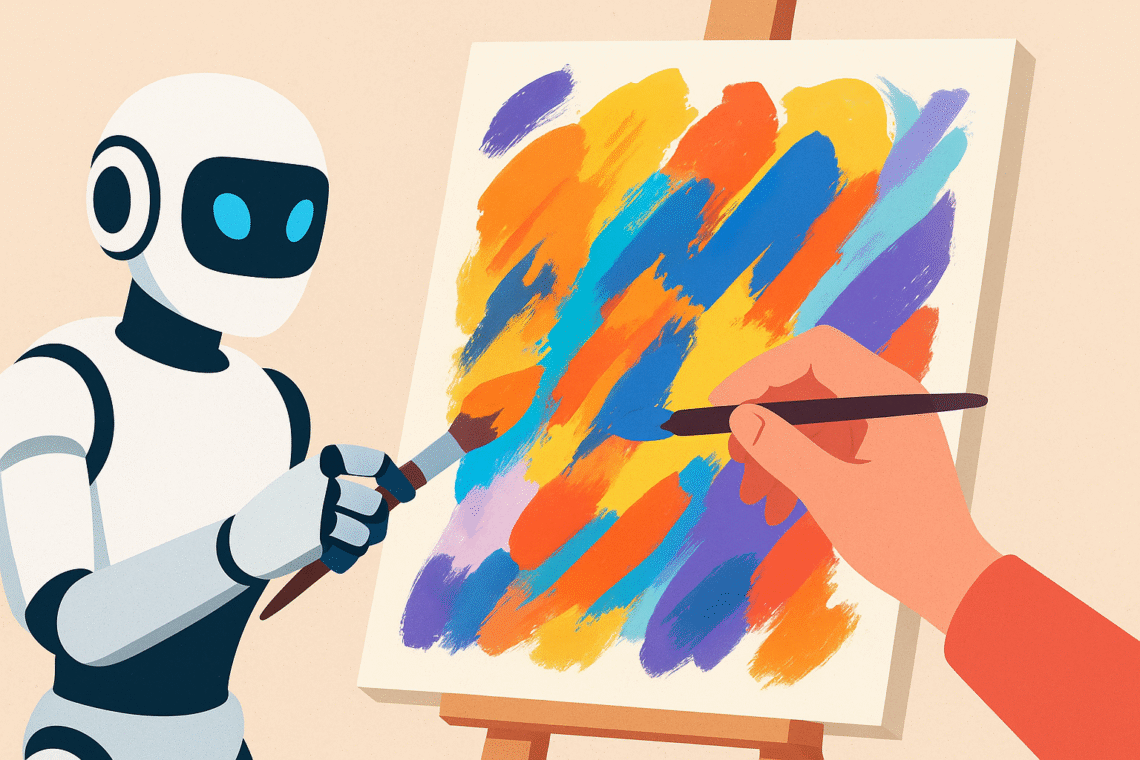
🌍 Introduction: The New Age of AI-Driven Creativity
From writing scripts to designing logos and composing symphonies, Generative AI is reshaping what it means to create. Once limited to tech labs, AI tools like ChatGPT, Midjourney, Runway, and DALL·E have now become essential companions for artists, writers, designers, and marketers.
Generative AI doesn’t just automate tasks — it augments creativity, unlocking new possibilities and workflows that were once unimaginable.
🎨 1. Design and Visual Arts: Creativity Meets Algorithms
In graphic design and illustration, AI has evolved from being a helper to a co-creator. Tools like Midjourney, DALL·E 3, and Adobe Firefly generate stunning visuals in seconds from a simple text prompt.
✳️ Benefits:
- Speeds up concept visualization
- Helps non-designers create professional graphics
- Enables infinite iterations of ideas
⚠️ Challenges:
- Risk of generic or derivative designs
- Ethical issues around copyrighted art and datasets
Still, many designers now use AI as a starting point — blending machine-generated ideas with their personal artistic touch.
✍️ 2. Writing and Content Creation: From Drafts to Ideas
Writers and marketers are using tools like ChatGPT, Jasper, and Writesonic to brainstorm, draft, and edit content. Generative AI can write blog posts, ad copy, and even poetry — saving time while enhancing creativity.
💡 Examples:
- Journalists use AI for data-driven reporting
- Copywriters generate A/B tested ad campaigns
- Screenwriters use AI for storyboarding and dialogue ideas
⚙️ SEO Tip:
Marketers pair AI tools with human editing to ensure content is authentic, engaging, and SEO-optimized — the winning combo in 2025.
🎬 3. Film and Animation: Storytelling Reinvented
AI is revolutionizing how films and animations are made. With tools like Runway ML, creators can generate realistic scenes, edit videos, and even change actors’ expressions — all without heavy VFX budgets.
🎥 AI in Action:
- Deepfake and face-swapping tech for post-production
- AI-assisted editing that saves hours of manual work
- Virtual character generation for indie filmmakers
The result? Faster production cycles and lower costs, empowering small creators to compete with big studios.
🎧 4. Music and Audio Production: AI as a Co-Composer
Music creation is no longer limited to trained musicians. Platforms like AIVA, Soundful, and Amper Music use AI to compose original tracks based on genre, mood, and tempo preferences.
🎵 Real-world Uses:
- YouTubers generating background music
- Game developers creating adaptive soundtracks
- Musicians co-producing with AI tools
However, questions about authenticity and ownership still linger — can an AI truly “own” a melody?
📰 5. Marketing and Branding: Personalization at Scale
Generative AI is helping brands create personalized campaigns for millions of users simultaneously. From AI-generated logos to individualized ad copy, marketing is becoming smarter and more adaptive.
📈 Impact:
- Faster campaign creation
- Dynamic content tailored to audience behavior
- Improved ROI and engagement
Brands like Coca-Cola and Nike have already integrated AI-driven creative campaigns that engage consumers in new, interactive ways.
⚖️ 6. Ethical Concerns and Future Challenges
With AI-generated art and content, ethical debates are heating up:
- Who owns AI-created work — the user or the machine?
- Should AI be trained on copyrighted material?
- How do we maintain human creativity amidst automation?
Experts suggest AI should assist, not replace, human creativity — turning it into a partnership rather than a competition.
🔮 7. The Future of Creativity: Human + AI Collaboration
Generative AI won’t eliminate creative jobs — it will redefine them. The most successful creators of the future will be those who blend human emotion with machine intelligence.
As one designer said, “AI doesn’t steal creativity — it gives it a new form.”
✅ Conclusion: Embrace the Change, Don’t Fear It
Generative AI is not the end of creativity — it’s a new chapter. From idea generation to production, it enhances human imagination, helping creators push boundaries like never before.
Whether you’re a writer, artist, or marketer, learning to collaborate with AI will be your competitive edge in the digital future.
📣 Call to Action
💬 What do you think — will AI replace creativity or empower it?
Share your thoughts below!
For more tech insights, subscribe to our newsletter and stay updated with the latest in AI and innovation.
